✍️ PERPLEXITY, BURSTINESS, DOCX REVISIONS & STYLE COACH

AI Text Detector, DOCX Revision Auditor & Writing Style Coach

Analyze essays, articles, Word (.docx), and PDF documents with sliding-window RoBERTa neural classification, DistilGPT-2 token perplexity, sentence burstiness, OpenXML revision history, and an interactive Sentence Style Coach that replaces robotic stock phrases in one click.

💡 Try a sample:
📰 Article URL:
📐 TRANSPARENT LINGUISTIC METRICS

How Perplexity, Burstiness & Sliding-Window Classifiers Work

Instead of issuing an unexplainable percentage accusation, TruthLens measures four concrete linguistic and document properties and shows you every flagged sentence.

Metric 01

DistilGPT-2 Token Perplexity

Perplexity measures how "surprised" a reference causal language model is by the writer's next-word choices. Unedited LLM output gravitates toward high-probability, low-perplexity token sequences, whereas human writers use idiosyncratic verbs, concrete nouns, and unexpected turns of phrase.

Metric 02

Sentence Burstiness (Cadence Variation)

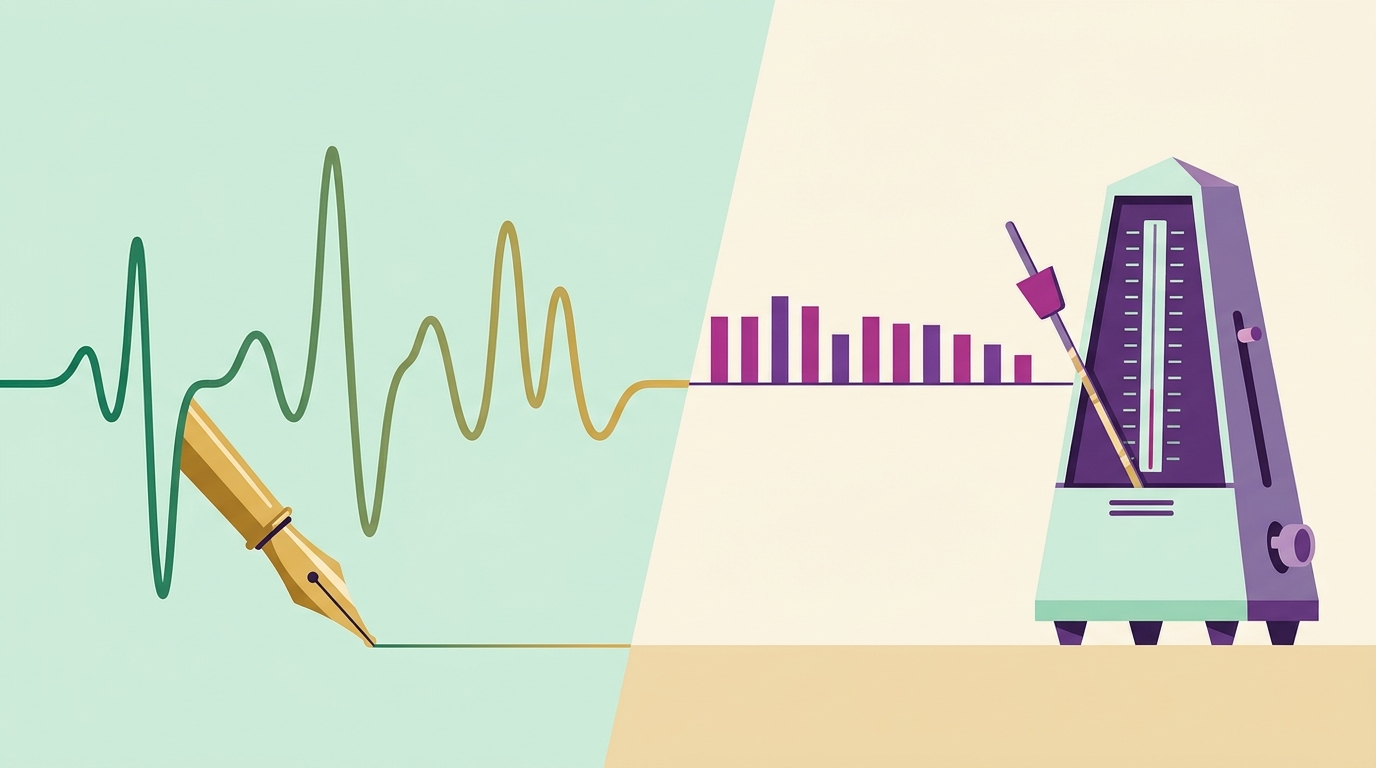
Measured via the coefficient of variation (CV = σ / μ) of sentence lengths. Default AI prose acts like a metronome—producing uniform 16-to-24-word sentences. Natural human writing alternates short, punchy 5-word observations with complex 35-word clauses.

Metric 03

320-Word Sliding-Window RoBERTa Triage

Long essays are rarely 100% AI or 100% human. TruthLens evaluates long documents across overlapping 320-word sliding windows using a fine-tuned RoBERTa classifier, surfacing both the mean probability and the peak AI-generated paragraph window.

Metric 04

Moving-Average Type-Token Ratio (MATTR)

Standard vocabulary diversity metrics penalize long documents. TruthLens computes 50-word sliding-window lexical diversity (MATTR) alongside a curated dictionary of 100+ formulaic LLM transitions ("delve into", "testament to", "intricate tapestry").

🤖 LLM RHETORIC SIGNATURES

Why Default AI Writing Sounds So Predictable Across Models

Reinforcement Learning from Human Feedback (RLHF) trains language models to write in a polite, hedged, and structurally repetitive style.

Pattern Category Default AI / LLM Habit Natural Human Editorial Habit How the Style Coach Fixes It
Opening Throat-Clearing "In today's fast-paced digital landscape, X plays a vital role..." Starts directly with a concrete fact, date, conflict, or specific observation Flags generic filler openings and suggests direct subject-first phrasing
Overused Metaphor Clusters "Delve into the intricate tapestry", "testament to", "beacon of hope" Uses domain-specific verbs and plain concrete nouns 1-click inline replacement with plain, high-clarity alternatives
Transition Stacking Starts consecutive paragraphs with "Furthermore," "Moreover," "It is important to note" Connects ideas implicitly through cause-and-effect rather than conjunctive adverbs Highlights repetitive transition scaffolding for immediate trimming
Sentence Length Rhythm Low burstiness (CV < 0.28): almost every sentence is 17–23 words long High burstiness (CV > 0.45): mixes 4-word fragments with 30-word explanations Flags long, uniform compound sentences and coaches structural variation
📄 DOCUMENT CONTAINER PROVENANCE

Protecting Writers & Students with Word (.docx) Revision History

Formal academic, legal, and non-native English (ESL) writing naturally uses structured grammar that black-box AI detectors unfairly flag. TruthLens pairs linguistic metrics with verifiable document container metadata:

DOCX Core XML

OpenXML Revision Counter (cp:revision)

When a writer drafts an essay genuinely in Microsoft Word or LibreOffice over several days, docProps/core.xml records dozens of incremental save revisions. A document copy-pasted from an AI chatbot and saved once typically shows revision = 1.

DOCX App XML

Logged Cumulative Editing Minutes (TotalTime)

TruthLens inspects docProps/app.xml to read the authoring application and cumulative editing minutes recorded by Word—providing strong supporting context when an authentic student draft is questioned.

PDF Structure

PDF Producer Tags & Incremental Save Markers

For uploaded PDFs, TruthLens inspects /Producer and /Creator headers alongside %%EOF incremental update markers to distinguish multi-session desktop publishing from one-shot browser or headless exports.

❓ WRITING & PERPLEXITY FAQ

Frequently Asked Questions About AI Text Detection

Can any AI text detector prove 100% that a student or writer used ChatGPT?

No. Statistical text classifiers and perplexity models measure predictability and stylistic cadence, not authorship history. Formal academic prose, technical documentation, and ESL writing often share low perplexity with LLM output. That is why TruthLens explicitly warns against using automated text scores as sole disciplinary proof and encourages inspecting .docx revision history and version logs.

What is a good Perplexity and Burstiness score for natural writing?

On our DistilGPT-2 reference scale, natural human prose typically shows an overall token perplexity above 35–45 and a sentence-length coefficient of variation (burstiness CV) above 0.40. Unedited chatbot output frequently exhibits perplexity below 25 and a burstiness CV below 0.30.

How does the Interactive Writing Style Coach work?

When TruthLens flags a sentence for formulaic stock phrases (such as "plays a vital role" or "delve into") or monotonous length, it generates a plainer, more direct rewrite suggestion right below that sentence. Clicking Apply suggestion updates your draft in the editor above so you can click Re-scan and watch your style metrics improve in real time.

Why should I upload a .docx file instead of just pasting plain text?

Pasting plain text only allows linguistic analysis (perplexity, burstiness, and neural text classification). Uploading the original .docx or .pdf file allows TruthLens to also inspect the container's internal XML metadata—including total editing minutes, revision save counts, and authoring software.

How many words are required for an accurate text analysis?

TruthLens requires at least 80 words (and recommends 150+ words) to compute a reliable verdict. Short paragraphs of one or two sentences do not contain enough syntactic variation or token entropy to distinguish human from machine writing reliably.

Is my essay or document saved in a database or repository?

Never. Unlike commercial plagiarism and academic scanners that permanently index student papers into institutional databases, TruthLens processes your text and documents strictly in volatile memory and discards them the instant your analysis finishes.