🎬 FRAME-BY-FRAME AI VIDEO & VOICE CLONE DETECTOR

Is This Video Real or Fake? AI Video & Audio Deepfake Detector

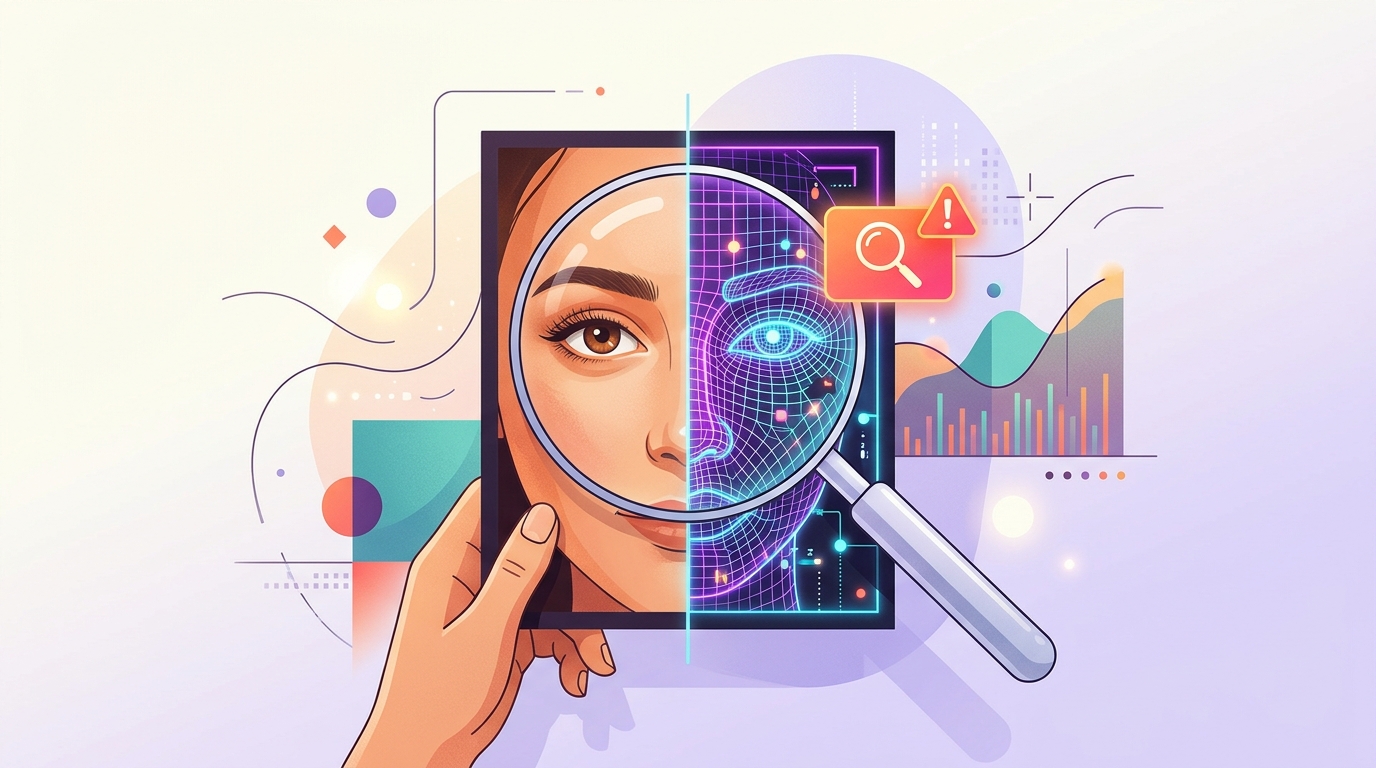
Find out if a video clip or voice recording is real or AI-generated. TruthLens decodes visual keyframes with OpenCV, scores every frame through a neural vision ensemble, inspects temporal texture flicker & 2D FFT decoder grids, and runs 4-second sliding-window Wav2Vec2 audio deepfake detection.

💡 Want to see how it works? Run a live sample:
🎬

Drag & Drop a Video or Audio File to Check if It Is Real or Fake

Or click to browse local files from your phone or computer

Video: MP4, MOV, WebM, MKV • Audio: MP3, WAV, M4A, OGG, FLAC (up to 50 MB)

🔗 Video / Audio URL:
🎥 MULTI-FRAME & ACOUSTIC DEEPFAKE ENGINE

How TruthLens Checks if a Video or Voice Clip Is Real or Fake

Almost no viral videos on X, TikTok, WhatsApp, or YouTube carry C2PA metadata. That is why TruthLens focuses directly on visual frame classification, temporal consistency, and acoustic vocoder forensics.

Signal 01

Multi-Keyframe Neural AI Scoring

TruthLens decodes up to 8 evenly spaced keyframes across the video (plus a 70% center region-of-interest crop to ignore social media captions and black bars) and scores each frame through our vision classifier ensemble—displaying both the weighted score and the peak synthetic frame.

Signal 02

Temporal Sharpness Flicker & Face/Subject Ratio

Generative video models (Sora, Kling, Runway Gen-3, Luma) and face-swap deepfakes struggle to maintain stable micro-texture sharpness across moving frames. TruthLens computes inter-frame Laplacian variance stability and compares central subject detail against the outer background.

Signal 03

2D FFT Neural Video Decoder Grids

When AI video generators upscale latent space frames into 720p or 1080p video, convolutional upsamplers often leave periodic 2D Fourier frequency spikes across keyframes. TruthLens inspects full-resolution keyframes for these mathematical grid anomalies.

Signal 04

4-Second Sliding-Window Audio Deepfake Detection

Using ffmpeg, TruthLens extracts the video's audio track and evaluates it with a Wav2Vec2 deepfake voice detector across 4-second windows—catching cloned voices (ElevenLabs, XTTS, RVC) even when a scammer splices a few seconds of fake speech into real audio.

🧬 SYNTHETIC VIDEO & AUDIO SIGNATURES

What Exposes Modern AI Video & Voice Generators

Each family of generative video and voice cloning models leaves distinct spatial, temporal, and spectral clues.

Generator Family Primary Visual or Acoustic Artifact How TruthLens Detects It
Text-to-Video Diffusion (Sora, Kling, Veo, Runway Gen-3, Luma) High-frequency texture swimming across consecutive frames, background object morphing, and synthetic latent diffusion smoothing Multi-frame neural ensemble scoring + inter-frame Laplacian sharpness stability (CV) + 2D FFT spectrum
AI Talking Heads & Lip-Sync (HeyGen, D-ID, Wav2Lip, SyncLabs) Over-smoothed lower-face/mouth box spliced onto a sharper static or looped head video Center-subject vs. background Laplacian residual ratio + 70% center ROI frame classifier + audio track deepfake check
Face-Swap Deepfakes (DeepFaceLab, Roop, FaceFusion) Frame-to-frame boundary flicker during rapid head turns or lighting shifts; mismatched skin grain Peak synthetic keyframe detection across 8 sampled timestamps + 1-click keyframe OSINT reverse search
Neural Voice Clones & TTS (ElevenLabs, XTTS, Bark, RVC) Neural vocoder phase artifacts, 16 kHz / 24 kHz spectral shelf cutoffs, or unnatural breath/pitch regularity Wav2Vec2 4-second sliding-window classifier + Inferno STFT spectrogram + autocorrelation F0 pitch tracking
🎧 VOICE CLONE & SCAM DEFENSE

Understanding Acoustic Spectrograms & Vocoder Cutoffs

Whether you are verifying a leaked political audio clip, a WhatsApp voice note, or an urgent voicemail, TruthLens visualizes the sound wave's internal physics alongside neural deepfake probabilities.

Acoustic Check 1

Sliding 4-Second Deepfake Localization

Sophisticated audio fakes often start with a real greeting before transitioning into a synthesized voice clone. By scoring overlapping 4-second windows independently, TruthLens pinpoints the exact timestamp window where synthetic speech peaks.

Acoustic Check 2

8 kHz & 12 kHz Spectral Shelf Cutoffs

Many text-to-speech vocoders generate audio internally at 16 kHz or 24 kHz (capping frequencies at 8 kHz or 12 kHz) before saving into a 44.1 kHz MP3/WAV container. Our Inferno spectrogram highlights these brickwall frequency ceilings visually.

Acoustic Check 3

Fundamental Vocal Pitch (F0) & Spectral Flatness

Autocorrelation pitch tracking measures the speaker's median vocal cord frequency (in Hz) and pitch deviation (±Hz), while Wiener entropy measures spectral flatness to distinguish tonal human harmonics from vocoder buzz.

❓ VIDEO & AUDIO DEEPFAKE FAQ

Frequently Asked Questions About Video & Voice Detection

Does TruthLens check if a video is actually fake/AI, or only check C2PA metadata?

TruthLens checks whether the video and audio content itself is real or AI-generated. Because 99.9% of videos online do not have C2PA metadata, we extract visual keyframes with OpenCV and decode the audio track with ffmpeg, running both through neural AI detectors, 2D Fourier frequency checks, and temporal consistency analysis. C2PA metadata is only checked as an optional secondary step.

Why do some compressed social media videos return a borderline or inconclusive score?

When a video is uploaded to X, TikTok, WhatsApp, or Instagram, the platform re-encodes it using heavy H.264/HEVC block compression. Aggressive video compression blurs fine pixel textures—which can simultaneously hide subtle AI diffusion noise and introduce blocky compression artifacts on real camera footage. To combat this, TruthLens evaluates both full frames and 70% center crops, weights peak synthetic frames, and combines visual scores with audio deepfake detection.

Why can't I analyze an X (Twitter), TikTok, or Instagram video directly from its link?

Platforms like X, TikTok, and Instagram lock their video streams behind per-user session tokens and anti-bot rate limits, blocking third-party servers from downloading the raw MP4 file automatically. Simply save or download the video to your phone or computer and drop the MP4 file into the box above for full frame-by-frame and audio analysis.

How can I find the original source of a suspicious viral video clip?

Every video scan in TruthLens automatically extracts 6 visual keyframes across the clip's timeline and computes a 64-bit perceptual dHash for each frame. Click any keyframe in your report and use the 1-Click Keyframe OSINT Launchpad to search that exact frame on Google Lens and TinEye. This quickly reveals if an old video is being recirculated out of context or if it originated on an AI creator account.

Can TruthLens detect AI voice clones in WhatsApp voice notes or MP3 files?

Yes. Upload any .mp3, .wav, .m4a, .ogg, or .opus voice note directly into the scanner. TruthLens decodes the audio waveform, runs our Wav2Vec2 synthetic-speech classifier across 4-second windows, and generates a full STFT frequency spectrogram and vocal pitch report.

What video and audio file sizes and formats are supported?

You can upload MP4, MOV, WebM, MKV, AVI, MP3, WAV, M4A, AAC, OGG, and FLAC files up to 50 MB. Audio tracks up to 180 seconds and evenly spaced video keyframes across the entire clip are analyzed in volatile memory and deleted immediately after your report is returned.